


The integration of Internet of Things (IoT) technology into commercial printing is rapidly transforming how printing businesses operate, introducing intelligence into every stage of the workflow. At Dumont Printing, we see firsthand how IoT-driven connectivity between printers, sensors, software, and cloud analytics dramatically enhances workflow efficiency across digital, offset, wide-format, packaging, and fulfillment operations. This evolution empowers organizations to monitor assets in real time, optimize energy usage, automate supply management, and streamline troubleshooting—delivering faster turnarounds, lower operational costs, and more reliable results for clients in industries from hospitality to healthcare and financial services.
Embracing IoT is more than a technical upgrade—it’s a strategic response to the demands for speed, customization, sustainability, and transparency in modern print. As experts at the forefront of print innovation, Dumont Printing leverages this technology to ensure we meet nationwide expectations for accuracy and service while preparing for coming advances in AI, automation, and supply chain integration.
Defining IoT in Commercial Printing
IoT refers to a system where physical devices—ranging from individual printers and presses to finishing machines—are embedded with sensors, software, and connectivity, allowing them to send and receive data over the internet. In the commercial printing industry, this creates a vast network where machines communicate performance metrics, maintenance needs, and production statuses in real time, allowing for continuous improvement and autonomous operations.
The Impact of IoT on Print Workflow Efficiency
The adoption of IoT is influencing commercial printing in several practical, measurable ways. Businesses like ours benefit from these advances by increasing uptime, reducing errors, and ensuring tighter alignment with sustainability and cost control goals.
- Real-Time Monitoring: Printers and related equipment report their status, toner or ink levels, and usage rates, allowing us to catch issues early and reorder supplies automatically to prevent downtime.
- Predictive Maintenance: Sensors track print quality and internal components, triggering alerts for potential issues (like worn-out printheads or low supplies) so repairs can be made proactively.
- Energy and Sustainability: IoT allows precise scheduling—machines power down during idle periods—and provides visibility into energy consumption, supporting environmental initiatives important to many clients.
- Waste Reduction and Cost Control: Detailed analytics help us optimize print runs, reduce spoilage, and better manage inventory, strengthening our sustainability practices and client value.
- Security and Compliance: For sensitive sectors such as financial services or managed healthcare, IoT-enhanced systems enable tracking, authentication, and detailed logging to safeguard confidential materials and comply with regulatory requirements.
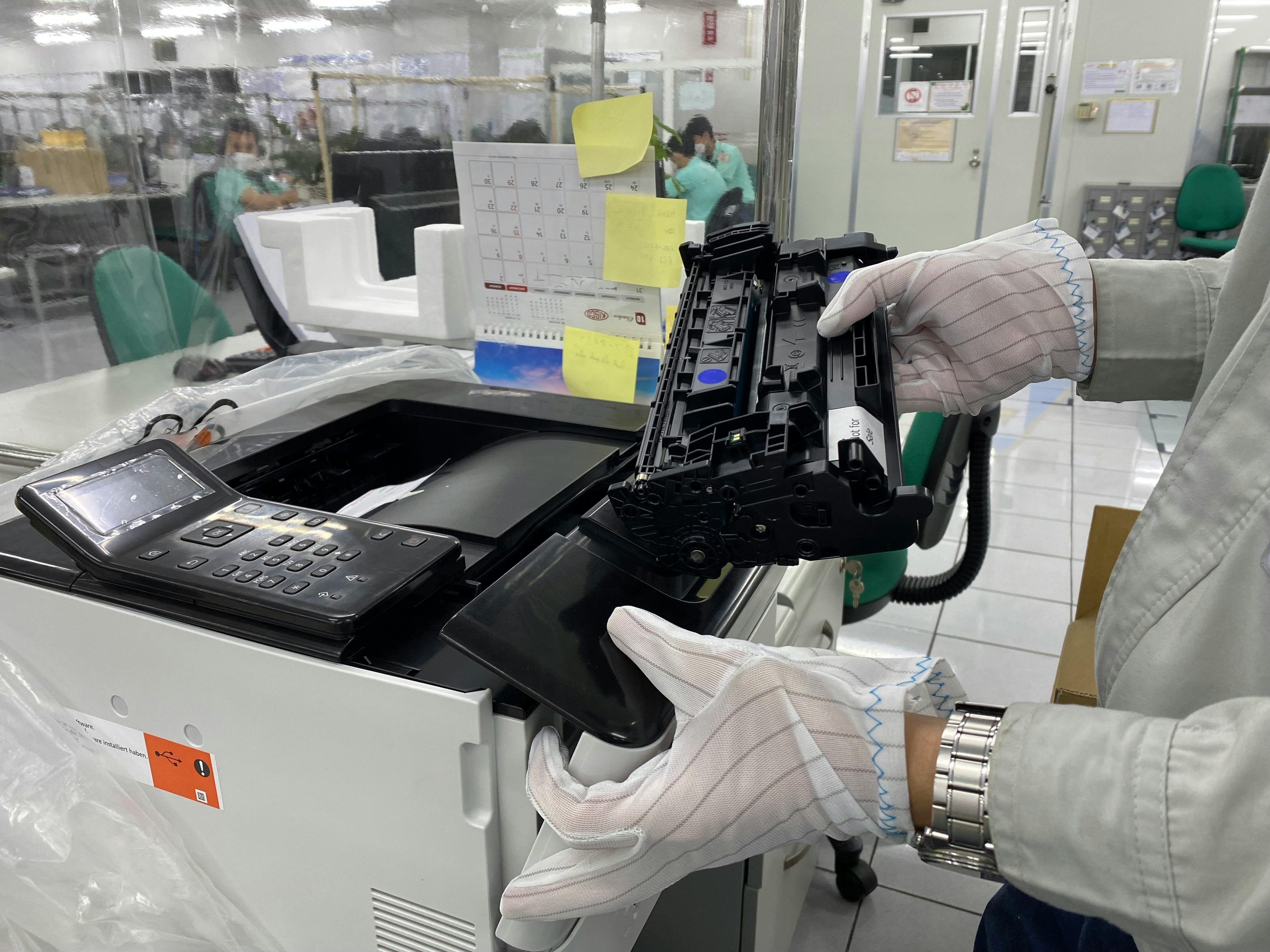
Industry News: IoT as a Driver of Industry 4.0 in Print
The influence of IoT in the printing sector is part of the larger Industry 4.0 trend, where manufacturing evolves by merging physical equipment and digital intelligence. Commercial printers of all sizes, from regional providers to global firms, are moving beyond basic networked devices to fully connected, cloud-managed systems. For us at Dumont Printing, this connectivity translates into more agile, responsive workflows that serve a diverse range of organizations—including events, charities, banks, startups, and multinational corporations—with improved turnaround and risk management.
Step-by-Step: How IoT is Changing the Commercial Printing Workflow
1. Fleet-Wide Management and Visibility
We implement IoT by equipping digital, offset, and wide-format printers with data collection modules. This lets us monitor the entire production fleet from a central, cloud-based dashboard. If a machine encounters a supply shortage or service issue, our team receives instant alerts—minimizing disruptions and ensuring timely delivery for everything from trade show graphics to custom packaging runs.
2. Seamless Variable Data and Mailing Operations
By integrating with cloud platforms, our print operators can securely access files, approve last-minute changes, and coordinate variable data projects without being tied to a physical office. This flexibility supports growing demand for personalized materials, agile campaigns, and hybrid work arrangements.
3. Packaging, Kitting, and Fulfillment Automation
Sensors embedded at key points in our kitting and packaging areas enable real-time tracking of inventory, fulfillment status, and machine performance. The system can dynamically adjust print runs or assembly lines to meet shifting order requirements, ensuring precision for custom labels, apparel, manuals, and orders destined for global shipment.
4. Predictive Maintenance in Action
Imagine a scenario where a sensor identifies degraded print quality on an offset press. The IoT system self-diagnoses the problem—a worn printhead—and schedules a technician before costly downtime occurs. This is the type of real-world IoT benefit we’ve seen deliver tangible ROI in our operations.
Case Study Example: Workflow Transformation Through IoT
Consider a mid-sized commercial printer with digital and offset lines. Prior to adopting IoT, they faced persistent downtime and wasted materials due to manual monitoring and delayed maintenance. By deploying a connected strategy similar to what Dumont Printing practices, they:
- Implemented machine sensors and cloud dashboards for live status updates
- Reduced print line downtime from 15% to 4% monthly
- Saved significant costs by slashing wasted supplies and optimizing energy usage by schedule
- Met rush deadlines for major campaigns, improving client satisfaction and retention
This kind of transformation now defines the competitive edge for commercial printers serving time-sensitive industries—something we prioritize in every project.
How to Get Started with IoT in Your Print Workflow
- Inventory Your Equipment: Catalog printers and finishing machines to determine which are IoT-ready or can be upgraded.
- Pick Your Connectivity Solution: Choose a platform that supports your machines and integrates with your digital workflow or design software.
- Deploy Sensors and Link to Cloud Dashboards: Activate remote monitoring and connect operations data to a central hub for instant access and reporting.
- Train Your Team: Ensure staff can interpret alerts, approve jobs remotely, and adapt to mobile/flexible work environments.
- Review, Optimize, and Expand: Continuously analyze efficiency data and look for areas to scale IoT integration—packaging, mailing, finishing, or fulfillment—across your print operations.
Industry Trends: What’s Next for IoT in Printing?
The next generation of IoT in print will see even tighter connections with artificial intelligence, enabling predictive analytics, zero-waste production, and close integration with supply chain and sustainability protocols. Industries facing greater scrutiny and compliance, such as healthcare, banking, education, and food service, will increasingly rely on traceable, data-driven print workflows to meet evolving standards. At Dumont Printing, we continually invest in these advancements to ensure clients receive industry-leading solutions for their unique needs.

Best Practices for Integrating IoT in Commercial Printing
- Focus on Data Security: Always ensure encrypted transmission of sensitive print and business data, and use authentication protocols to protect client information, especially in sectors like healthcare and finance.
- Prioritize Training: Success depends on team familiarity with both devices and software—periodic education ensures maximum workflow efficiency and smooth responsiveness to alerts.
- Start with High-Impact Areas: Identify bottlenecks in your workflow (such as ongoing supply shortages, frequent downtime, or high waste) and pilot IoT upgrades in these locations for visible results.
- Align with Business Goals: Integrate IoT rollouts with broader company objectives such as sustainability, turnaround speed, or marketing customization for measurable ROI.
- Monitor and Iterate: Use the analytics to continually refine processes, proactively address emerging issues, and identify opportunities for scaling connected solutions.
Related Reading
- Optimizing Workflow: How Automation Empowers Commercial Print Operations
- How AI-Driven Automation Is Reshaping the Packaging Workflow for Manufacturers
- How Advances in Print Automation Deliver Faster Turnaround for Event and Trade Show Graphics
FAQ: IoT in Commercial Printing
What exactly is IoT in printing?
IoT in printing refers to the use of connected sensors and software in printers and production equipment to monitor operations, manage supplies, trigger maintenance, and provide real-time analytics, all from a central location or cloud dashboard.
Why should a commercial printer invest in IoT-enabled workflows?
Implementing IoT increases efficiency by providing visibility into equipment status, reducing downtime, enabling predictive maintenance, supporting sustainability, and facilitating secure, traceable print jobs—key differentiators for modern print buyers.
What are the main risks with IoT in print?
Primary concerns include data security, integration complexity, and the need for employee training. Addressing these proactively, with tight access controls and robust protocols, is essential for success.
How can Dumont Printing help my business take advantage of IoT?
As a leader in commercial print innovation, Dumont Printing provides expert consultation and implementation of IoT-driven workflows for companies of all sizes, ensuring a seamless transition to more efficient, responsive, and intelligent print production.
Can IoT be used to improve sustainability in print?
Absolutely. Connected machines help monitor energy usage, reduce waste by optimizing print runs, and support sustainable sourcing by integrating with supply chain data—all of which contribute to reduced environmental impact.
Conclusion: Embracing the Future of Print with IoT
IoT technology is revolutionizing the landscape of commercial printing, offering substantial gains in workflow efficiency, cost reduction, quality, and sustainability. At Dumont Printing, our commitment to continuous innovation ensures we remain the go-to expert and trusted partner for clients navigating this new era of print technology—delivering smarter, greener, and more agile solutions from design to delivery. If you’re ready to explore how IoT can transform your print operations, connect with our team for proven guidance and tailored expertise.