

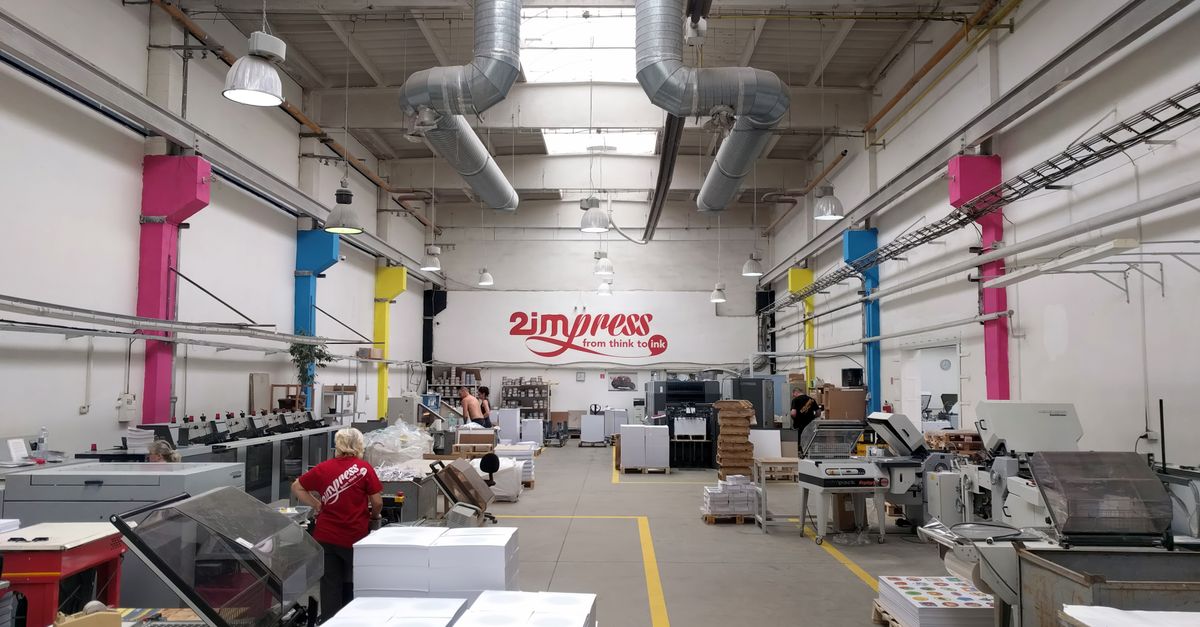
Print automation is fundamentally reshaping how both small and large businesses produce marketing materials, operational documents, and customer communications. By implementing automated workflows, companies are able to accelerate production, reduce human error, and keep costs under control—regardless of organizational size. As expectations around turnaround time, personalization, and multi-channel consistency continue to rise, automation is transforming print from a labor-intensive process into a scalable, strategic asset.
What Is Print Automation?
Print automation refers to the use of software, workflow rules, and integrated equipment to minimize manual tasks in the printing process. Commonly, automated systems manage file checks, job routing, approvals, production assignments, and tracking from order through delivery. This can be applied to various services, including digital and offset printing, wide format graphics, bulk mailing, fulfillment, custom packaging, variable data printing, and more.

How Print Automation Benefits Small Businesses
Many small businesses struggle with limited staff and tight budgets. Print automation offers a practical way to achieve more with less by streamlining repetitive, time-consuming tasks that previously required significant labor and oversight.
- Faster Task Completion: Automation expedites processes like estimating, file setup, proofing, and mailing preparation, freeing staff for core business priorities.
- Error Reduction: Automated preflight, proofing, and routing functions catch mistakes before production even begins. This is crucial, as a single misprint can absorb much of a small business’s profit for a given job.
- Personalized Marketing Made Simple: With integrated variable data workflows, small businesses can deliver targeted campaigns (postcards, flyers, letters) at scale, without manual handling of each customer record.
- Improved Cost Efficiency: Automated workflows cut back on labor, reduce waste from misprints, enhance planning, and make bulk or batch printing financially accessible.
Restaurants, local retailers, foundations, and service providers often realize immediate improvements to workflow efficiency and campaign consistency utilizing automation.
Advantages of Print Automation for Large Businesses
Larger organizations often face the challenge of coordinating print production across multiple departments or locations. Print automation enables standardization and scalability without proportional staff growth.
- Consistency at Scale: Automation ensures brand, format, and process consistency for high-volume workflows spanning diverse teams and geographies.
- Scalable Output: As print demand grows—during seasonal surges, store openings, or national campaigns—automation allows output to increase without a parallel uptick in headcount.
- Enhanced Process Visibility: Automated print systems provide real-time tracking and reporting, giving managers visibility into job status, delays, and resource allocation.
- Security and Compliance: Features like access control, permissions, and traceability support regulated industries that need stringent documentation and privacy standards.
Banks, hospitals, casinos, universities, and national brands with complex print demands benefit from automated solutions, seeing fewer production errors and improved service level agreements.
Core Business Benefits Shared by All
- Accelerated Turnaround: Quick movement from order to output shortens delivery times in both marketing and operational communications.
- Labor Savings: Many manual jobs, from estimating to batching, are handled digitally, allowing teams to shift focus to higher-value activities.
- Error Minimization: Checks and validations at each stage yield a higher standard of job accuracy and reduce costly reprints.
- Lower Material Waste: Accurate job setups and automated estimations mean less overproduction and lower raw material use.
- Enhanced Customer Experience: Ordering, approval, and reordering are simplified, creating a seamless client experience.
Industry Trends and Print Automation’s Evolving Role
The broader print industry is experiencing a shift toward even greater automation, smart workflows, and connectivity between production systems. As digital expectations rise, automation enables printers to deliver on demands for tighter deadlines, personalized marketing, and sustainable operations. Many businesses now consider automated print solutions essential for maintaining quality and growth.
The adoption of integrated automation is also driving sustainability by reducing waste and supporting resource-efficient workflows, which aligns with growing corporate responsibility initiatives. (To learn more about how print innovation is advancing sustainability in the commercial print industry, see our post on Green Printing Technology.)
How to Start with Print Automation: A Practical Guide
1. Pinpoint the Most Repetitive Jobs
Begin by identifying which jobs (flyers, handbooks, direct mail campaigns, labels) repeat regularly and follow a routine procedure. These are the best candidates for immediate automation gains.
2. Map Out the Entire Workflow
Chart every task from job intake and file preparation to proofing, printing, finishing, kitting, mailing, and shipping. Steps that occur more than once per week warrant closer review for possible automation.
3. Standardize Templates and Guidelines
Automation is most effective when artwork sizes, bleed specifications, naming conventions, and approval processes are clearly defined and standardized. This allows templates to be reused easily and reduces errors caused by variations in input.
4. Integrate Print, Mail, and Fulfillment
Greater efficiency emerges when printing is tightly connected with downstream tasks like mailing, fulfillment, and distribution. This creates “one-touch” workflows for direct mail, event kits, or multi-piece promotions—reducing manual handoffs and improving traceability.
5. Measure Success
Track clear metrics before and after deploying automation, such as job completion times, order accuracy, reprint rates, and customer satisfaction. Data-driven evaluations reveal where automation drives the most value, and where further refinement is possible.
A Real-World Example: Automation in Action
Imagine a regional nonprofit that needs to send monthly donor letters and event invitations. Without automation, staff would have to manually export recipient lists, merge addresses with templates, print, insert, and mail each piece—an error-prone and time-consuming effort. By automating data merges, print batching, and mailing, the entire process becomes quicker and more accurate, with consistent branding and fewer mistakes. This same approach applies to restaurant groups managing multiple menus, flyers, or employee handbooks across different locations.
When Is a Full-Service Print Partner the Best Option?
For many businesses, building automation infrastructure is not practical or cost-effective. In these cases, partnering with a full-service commercial printer like Dumont Printing is the most efficient route. By leveraging expertise in digital and offset printing, wide format production, variable data, custom packaging, and nationwide fulfillment, Dumont Printing enables organizations to realize all the advantages of automation without increasing their internal workload. For marketing departments, multi-location franchises, growing startups, or institutions with recurring needs, having a seasoned partner translates into quicker launches, consistent branding, and seamless distribution.
Frequently Asked Questions (FAQ) About Print Automation
- What types of print jobs are best suited for automation?
- Routine, high-volume, and recurring jobs—such as flyers, mailers, handbooks, packaging, and event materials—yield the largest gains from automation because they follow repeatable workflows.
- Can print automation handle personalized marketing?
- Yes. With variable data workflows, businesses can personalize each printed piece while maintaining overall production speed and accuracy.
- Is print automation secure and compliant?
- Many automation solutions offer controls over file access, approvals, and document traceability, supporting industry-specific compliance needs for data privacy and regulated materials.
- How can businesses measure the ROI of print automation?
- Key metrics to track include turnaround time, error and reprint rates, labor hours per job, order accuracy, and waste reduction. Comparing these before and after automation provides insight into return on investment.
- What is the best way to get started with automation?
- Begin by automating the most routine, resource-intensive jobs, then gradually expand to more complex workflows. Partnering with a commercial printer experienced in automation, such as Dumont Printing, can accelerate results.
Conclusion
The transition to print automation delivers clear, proven advantages for small and large businesses alike. By accelerating production, improving quality, enabling personalized marketing, and reducing costs, automation is central to building more agile and competitive organizations. The print industry’s move toward smarter, more connected workflows aligns with the need for efficiency, consistency, and sustainability in every business sector.
To learn more about innovative trends and industry best practices—from automation to sustainable substrates—explore our other resources, such as Green Printing Technology or Web-to-Print Solutions. For a partner who understands both the technical demands and business realities of modern printing, connect with us at Dumont Printing.